In many Muslim communities across the United Kingdom and the United States, learning spaces are full, active, and outwardly inspiring. There are sermons, study circles, weekend seminars, charity events, group chats, and a constant stream of short reminders online. All of this can be beneficial. Yet for many women, especially those trying sincerely to grow, exposure to so much visible practice can awaken a quiet ache: the feeling of being behind spiritually.
This is where journaling for spiritual comparison becomes deeply useful. Not as a way to document inadequacy, but as a way to notice what is happening in the heart before comparison shapes intention. A woman may attend an imam sermon and leave not with renewed niyyah, but with a heavy sense that everyone else is more disciplined, more knowledgeable, or more beloved by Allah. That inner shift matters. What began as a chance to receive guidance can become a mirror of imagined failure.
The problem is not community itself. The problem is the subtle movement from inspiration to ranking. When spiritual life becomes something measured against other people, sincerity starts to thin. You may pray, attend, read, or post from a place of pressure rather than presence. Over time, imam sermon comparison can make worship feel like a race you are losing, even when your Lord is asking only for honesty, steadiness, and return.
How comparison quietly damages sincerity
One of the most difficult parts of comparison is that it often disguises itself as motivation. You tell yourself that feeling unsettled after a talk will push you to do better. Sometimes it does, for a moment. But often the deeper result is agitation. You begin to consume reminders anxiously, always searching for proof that you are still serious enough, practicing enough, learning enough.
This is especially common where there is visible UK Muslim community pressure or US Muslim community pressure. In some spaces, attendance becomes a silent measure of commitment. In others, fluency in religious language signals status. Even online, routines are displayed with polished consistency: pages read, lectures attended, dawn prayers made to look effortless. A Muslim woman can absorb all of this and begin carrying comparison guilt as though it were piety.
That guilt is not always a sign of spiritual depth. Sometimes it is simply evidence that the heart has become crowded by witnesses other than Allah. If your private worship feels smaller because someone else appears more advanced, the issue is not only discipline. It is orientation. Journaling can help you name that shift with tenderness and truth.
Spot the comparison triggers before they shape your week
If you want to know how to stop comparing your faith, start by identifying the situations that reliably stir insecurity. Comparison is rarely random. It usually follows a pattern.
For some, the trigger is the group chat after an event, when others share notes, reflections, and future plans while you are still processing what you even felt. For others, it is event attendance itself. You may notice a subtle panic when you cannot go, or shame when someone asks whether you were there. Another trigger is knowledge display: who cites more, who asks the sharpest questions, who seems already familiar with every concept the speaker mentions.
Online routines can also intensify feeling behind spiritually. A short video of someone reading before dawn or summarizing a class can seem harmless, yet in a vulnerable moment it can become evidence against you. Not because the content is wrong, but because your heart is reading it through the lens of scarcity. Their consistency starts to feel like your failure.
Journaling for spiritual comparison helps interrupt that story. Instead of asking, “Why am I not like her?” you begin asking, “What exactly was triggered in me, and what does it reveal about my fears, my hopes, and my current spiritual needs?” That question is far more fruitful.
A simple weekly journaling setup
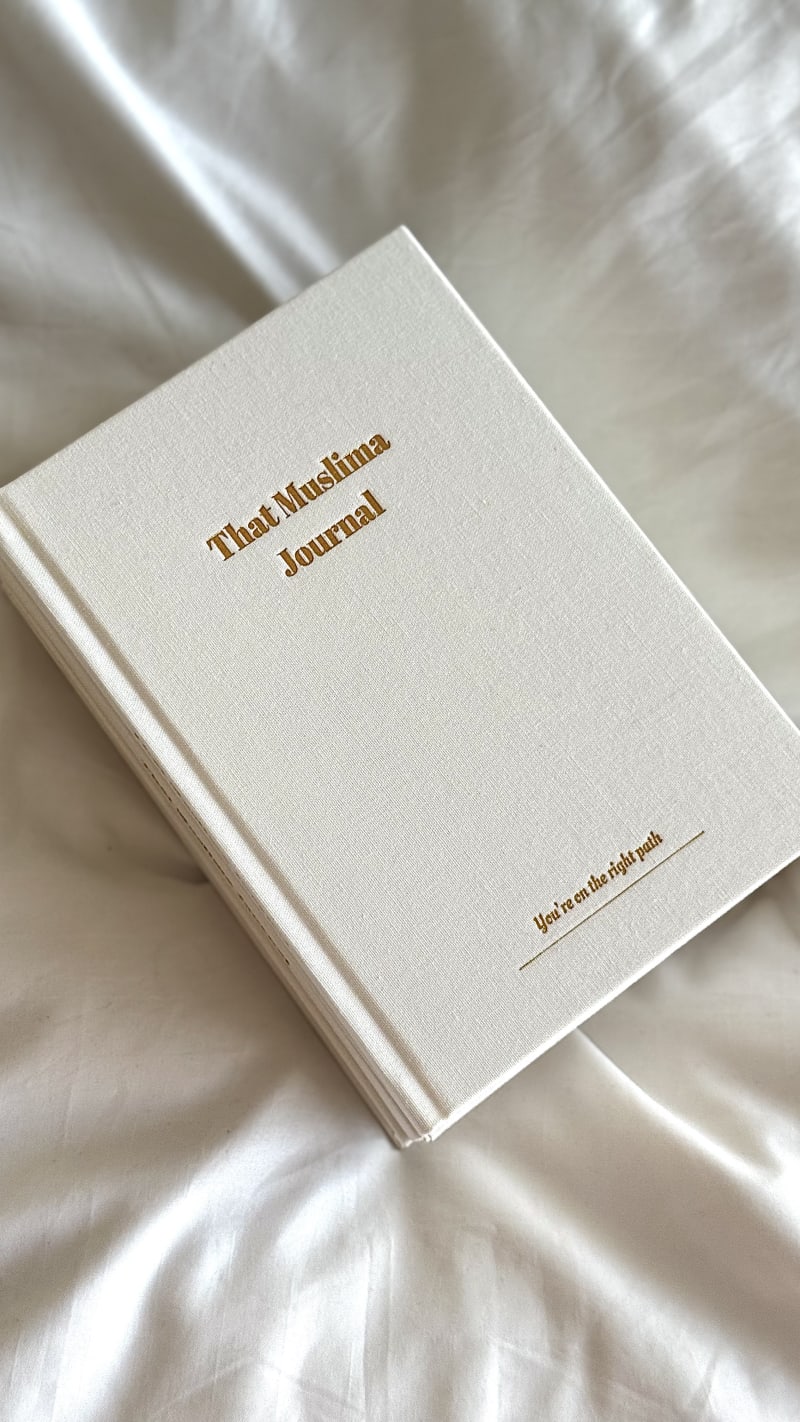
You do not need a long reflective practice to benefit. A brief, honest routine is enough. Keep one page in your journal for before community events and one page for after. If you use That Muslima Journal, this can become a gentle anchor for weekly muhasaba, helping you observe your inner state without turning reflection into another performance.
Before a sermon, class, or gathering, spend five minutes with this prompt: What am I hoping to receive from Allah through this event, beyond how I appear to others? This question restores intention. It separates benefit from display and reminds you that attendance is not the same as transformation.
After the event, write for five minutes on this prompt: When did I feel close, and when did I feel small? Be specific. Did a topic bring relief? Did someone else’s confidence make you shrink? Did a speaker’s words awaken longing or self-judgment? Naming the exact moment comparison entered the heart weakens its power.
Later that evening or the next morning, use a third prompt: What is one faithful action that belongs to my season, my capacity, and my relationship with Allah right now? This is crucial. Comparison urges imitation without discernment. But sincere growth is personal. Your next step may be smaller than someone else’s, yet more truthful for you.
Tadabbur prompts to reconnect with sincerity, not status
When comparison becomes intense, return to the Quran not as a scoreboard but as a place of recalibration. The Quran repeatedly draws attention back to sincerity, accountability, and the unseen reality of the heart. This is where tadabbur becomes healing.
Choose one verse that reminds you Allah sees intention, effort, and truth beyond appearance. Read it slowly. Then journal with this simple template.
Verse: What words or meanings in this verse soften my need to be seen as spiritually impressive?
Heart reaction: What discomfort appears in me when I remember that Allah wants sincerity, not status?
False belief exposed: What have I been acting as though I must prove to people?
Return: What would it look like to seek Allah quietly this week?
This kind of reflection does not deny the value of learning in community. It simply puts community back in its proper place. People can encourage you, teach you, and accompany you. They cannot define your standing with Allah. That belongs to a realm no public routine can fully reveal.
Niyyah repair after a comparison spiral
Sometimes comparison does not stay subtle. It spirals. You leave a gathering deflated, open your phone, see more reminders, and suddenly everything feels contaminated. Your worship looks weak to you. Your effort feels late. Your heart becomes harsh.
In that moment, do not begin with self-criticism. Begin with repair. Niyyah can be renewed. Hearts can return quickly when met with honesty and mercy.
Write a short dua-based reset in your journal. Keep it simple and direct. Address Allah with what is true: that you felt envy, pressure, sadness, or fear; that you do not want to worship for image; that you want a heart that is sincere even when unseen. Then ask specifically for steadiness, protection from comparison, and love for hidden good deeds.
You might structure it in three lines: admission, request, and return. Admission names the state without drama. Request asks Allah for purification and ease. Return ends with one small commitment, such as praying with more presence, making evening dhikr, or reading a few verses without posting about it. This is how you step out of comparison guilt as a Muslim woman without pretending the struggle was not real.
Choose one offline practice and let it be enough
A gentle action step matters because comparison often thrives in abstraction. You feel behind in general, so you chase many things at once. The better response is to choose one offline practice to return to. Not a dramatic plan. One practice.
It may be two quiet minutes of dhikr after prayer. It may be one page of Quran with attention. It may be writing one sincere line of gratitude before sleep. The key is that it is offline, repeatable, and not built for visibility.
Then track it without performance. In your journal, do not rate how impressive it looked. Simply note: Did I return to it today? What supported that return? What made it harder? This style of tracking trains the heart to value consistency over image.
Journaling for spiritual comparison is not about becoming immune to community influence. It is about becoming more rooted than reactive. In a time when spiritual life is often made visible, measurable, and shareable, your private honesty becomes a form of protection. The goal is not to stop admiring good examples. The goal is to stop turning other people’s paths into evidence against your own.
If community talks have been leaving you more burdened than nourished, let your journal become a place where sincerity is restored. Let it hold your muhasaba, your dua, your small returns, and your honest questions. And let That Muslima Journal serve, where helpful, as a quiet companion in that process. You do not need to keep up with every visible act. You need a heart that keeps returning, truthfully, to Allah.