There is a particular kind of exhaustion that comes from caring for people all day and then coming home feeling as though you still have not done enough. For many women in healthcare, especially within UK Muslim healthcare settings and beyond, the strain is not only physical. It is emotional, spiritual, and deeply personal. You may spend a full shift responding to pain, urgency, grief, and constant need, only to return home and hear an inner voice asking why you are too tired to read more Quran, pray longer, cook better, reply faster, or be more present. This is where thoughtful muslim woman journaling can become more than reflection. It can become mercy.
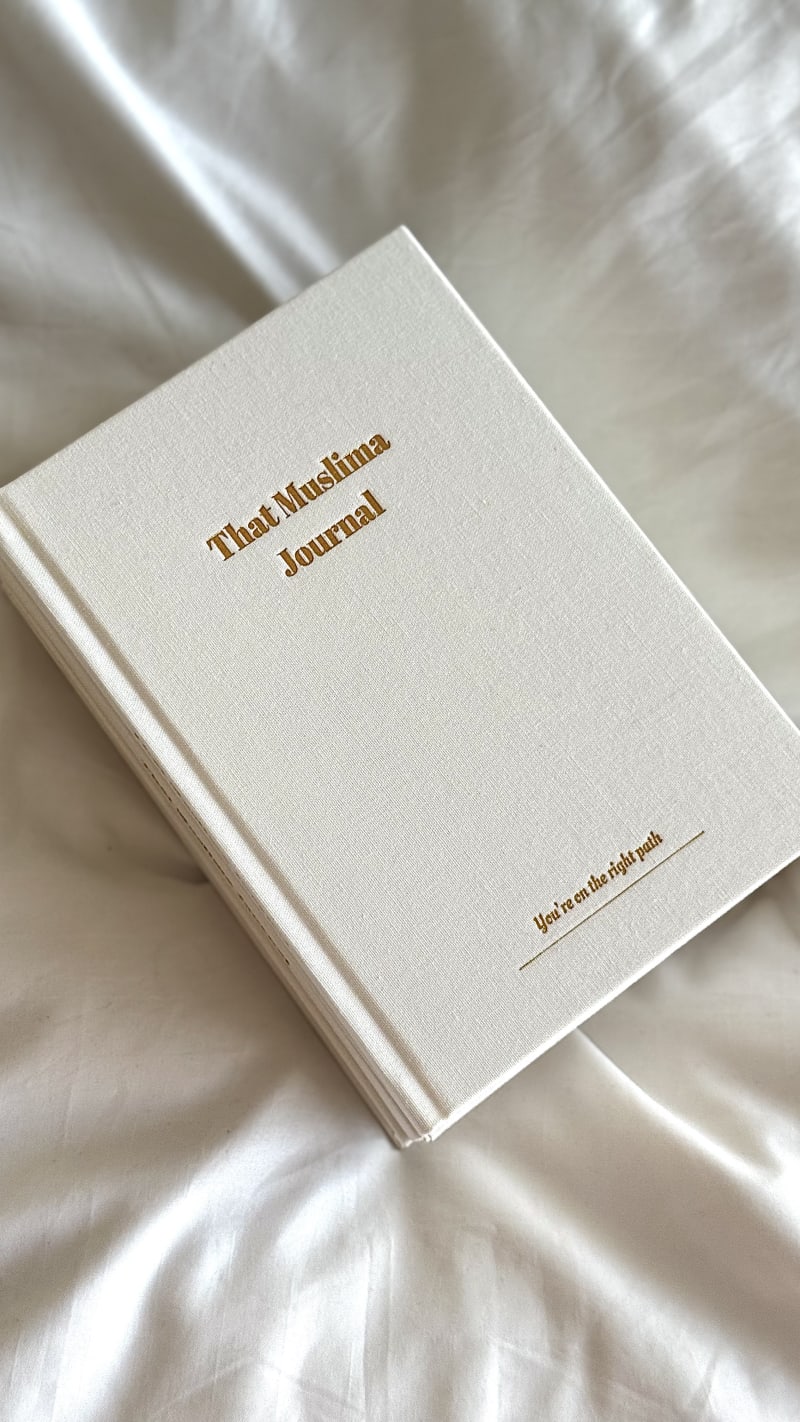
The question is not always whether you are doing enough. Often, the deeper question is whether you are measuring yourself by a standard that ignores your reality. That Muslima Journal can support this kind of honest inner work by helping you slow down the thoughts that become louder when your body is already depleted.
When service all day turns into guilt at night
Healthcare work can train the mind to stay alert, responsible, and self-sacrificing. This can quietly spill into your spiritual life. After a demanding shift, you may feel guilty for needing silence, sleep, or food before anything else. You may compare yourself to people with more predictable routines and conclude that your worship is weak. But exhaustion is not the same as indifference, and reduced capacity is not the same as reduced sincerity.
Try these journal prompts for healthcare workers when the guilt rises after work:
What did I carry today that no one else saw?
What am I accusing myself of tonight?
If a friend had my shift, my body, and my responsibilities, would I judge her this harshly?
What part of my guilt comes from love of Allah, and what part comes from comparison or perfectionism?
What do I need to stop calling failure when it is actually fatigue?
This kind of writing is a form of muhasaba, but it should be rooted in truth, not self-punishment. Honest reflection is meant to bring clarity, not crush the heart.
A spot-the-thought exercise for guilt spirals
When you notice a thought such as, “I should be more productive,” “I should have done more worship,” or “Other people manage better than I do,” pause and write it down exactly as it appears. Then answer it gently.
Use this simple structure:
The thought I am having is:
What triggered it:
What my body feels like right now:
Whether this thought is fully true, partly true, or distorted:
What is a more honest and Allah-conscious response:
For example, the more honest response may be: “I am disappointed that I had little energy tonight, but I spent the day serving people in difficulty. I can return to Allah in a small way without pretending I have more strength than I do.”
This is especially helpful for anxiety after work shift because anxious thinking often sounds moral when it is actually fear. It tells you that if you rest, you are neglectful. If you slow down, you are falling behind. If you do less, you are less devoted. Writing interrupts that false urgency.
Reframing work through intention without forcing perfection
One of the gentlest forms of tawakkul journaling is to revisit your niyyah. Not to romanticize burnout, and not to claim that every difficult shift automatically feels meaningful, but to remember that service can be offered to Allah even when it feels messy.
Before or after a shift, write through these prompts:
What intention do I want to carry into my work today?
How can care, patience, honesty, or gentleness become worship in my role?
Where did I act with integrity today, even if no one noticed?
Where did I reach my limit, and what does that teach me about being human rather than superhuman?
What am I entrusting to Allah because it is beyond my control?
Tawakkul is not pretending you are calm. It is placing the outcome with Allah after using the means available to you. A journal can help you separate what is your responsibility from what never belonged to you in the first place.
Body-first prompts for post-shift recovery
Many women try to think their way out of distress when their nervous system is asking for safety first. After long shifts or night work, your body may still be in alert mode. You may feel restless, numb, tearful, or unable to settle into worship even though you want to. Begin there.
Write briefly on these prompts before expecting yourself to do more:
What is my body asking for first: water, food, quiet, darkness, warmth, or sleep?
What sensation tells me I am overstimulated right now?
What would practical sabr look like in the next thirty minutes?
Am I calling sleep laziness when it is actually recovery?
What is one gentle act of care that would help me return to Allah with more steadiness later?
Practical sabr is not passive suffering. It is disciplined gentleness. It may mean going to sleep without scrolling, lowering the lights, making dhikr while lying down, or accepting that your best next act is rest. This is not spiritual failure. It is wise stewardship of the body Allah entrusted to you.
Salah and dua in small windows of time
There are seasons in healthcare life when long routines are simply not realistic every day. What matters is not abandoning connection because it cannot look ideal. A two-minute return is still a return.
Use these micro-prompts before or after rest:
What do I want to say to Allah in one honest sentence right now?
What prayer feels most urgent in my heart today?
If I missed a prayer due to sleep, confusion, or overwhelm, what do I need to write so I return without shame and delay?
What would a sincere two-minute prayer space look like for me today?
Which name of Allah do I most need to remember tonight?
You can also keep a short page for du'a for stressed healthcare workers. Write simple, living prayers such as:
O Allah, place calm in my chest after intensity.
O Allah, accept my service and forgive my shortcomings.
O Allah, help me rest without guilt and rise without heaviness.
O Allah, return me to salah with love, not fear.
O Allah, make my care for others a means of nearness to You.
What to write when you are too tired to think
Some days, even reflection feels like too much. On those days, journaling should become smaller, not disappear. Triage your writing the way you would triage energy. Keep it brief, clear, and merciful.
Try one of these formats:
Three short sentences: “Today was heavy. I am safe at home. Allah sees me.”
Quran reflection fragment: write one phrase that stays with you, even if you do not expand on it.
Dua list: list five needs without explanation.
Body check line: “My shoulders are tense, my thoughts are racing, I need sleep.”
Gratitude without pressure: name one mercy from the shift, one from home, and one from faith.
This approach keeps muslim woman journaling grounded in reality. It does not demand polished insight from a depleted heart. It simply leaves a door open.
A gentle one-week template for shift days and off days
The most sustainable journaling practice is the one that respects your actual life. Instead of aiming for the same routine every day, create two versions: one for shift days and one for off days.
On shift days, keep it to five minutes or less. Write: my intention for today, one emotional check-in after work, one line of dhikr or Quran reflection, and one dua before sleep. If the day was especially hard, replace all of that with three honest sentences.
On off days, expand gently. Write: what my body is recovering from, what my heart has been carrying, one guilt thought I want to challenge, one area where I saw Allah’s help this week, and one intention for the coming days. You can also review missed prayers, not to shame yourself, but to make a calm plan for reconnection.
A simple weekly rhythm might look like this: on workdays, brief check-ins; on one off day, a longer muhasaba page; at the end of the week, a short review of where you felt stretched, where you felt supported, and what you want to carry forward. This makes journaling doable, restorative, and spiritually honest.
If you are asking, “Am I doing enough?” after giving so much of yourself to others, begin here: write what is true. Not the harsh version, not the ideal version, but the truthful one. You are allowed to be devoted and tired. You are allowed to need rest and still seek closeness to Allah. And you are allowed to build a reflective practice that meets you in the middle of real life, with compassion, structure, and sincere niyyah.